Semiconductor
DRAM Shortage Is Starving On-Device AI of Cheap Memory
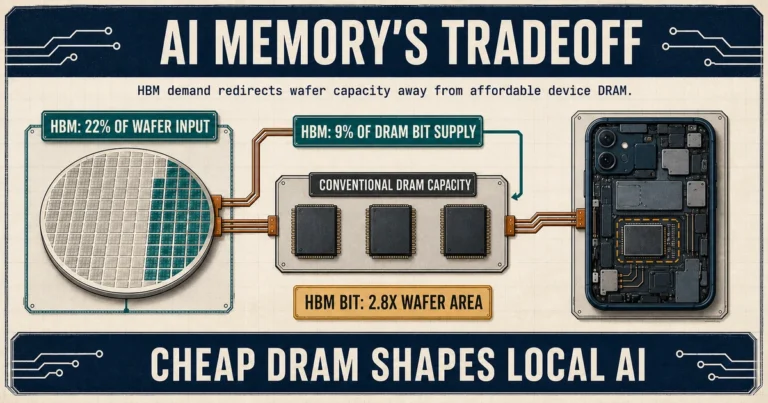
The 2026 DRAM shortage looks like pricier gadgets, but AI's cloud demand is rationing the cheap memory on-device AI needs - and Samsung is starving its own phones.
Nemothia connects technology news, research and market signals into useful context, and asks one question of each story: what has to be true in production before an announcement becomes a shipping part. Coverage spans semiconductors, AI infrastructure and robotics.
The 2026 DRAM shortage looks like pricier gadgets, but AI's cloud demand is rationing the cheap memory on-device AI needs - and Samsung is starving its own phones.
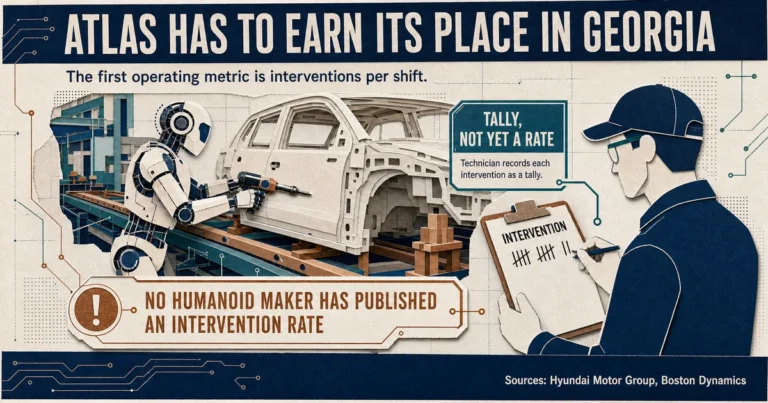
Hyundai says Atlas's current deployment focus is its Georgia Metaplant, not Korean plants. The first number that matters there may not be fleet size, but the frequency of human intervention.
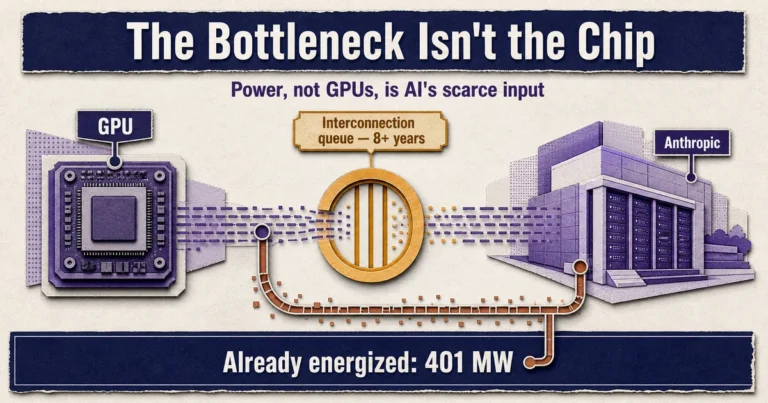
Anthropic's $19B, 20-year TeraWulf lease shows AI's real bottleneck is AI data center power and grid interconnection, not chips. Here's who captures the value.
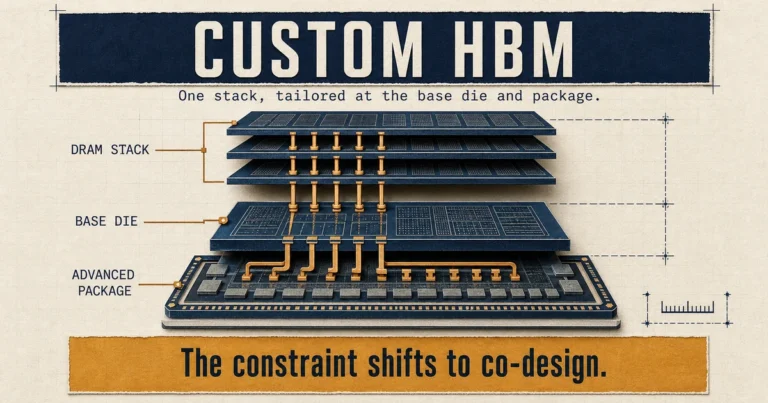
Custom HBM won't end AI memory scarcity - SK hynix's HBM4E roadmap shifts the real bottleneck to base-die co-design, qualification, and yield-limited variants.
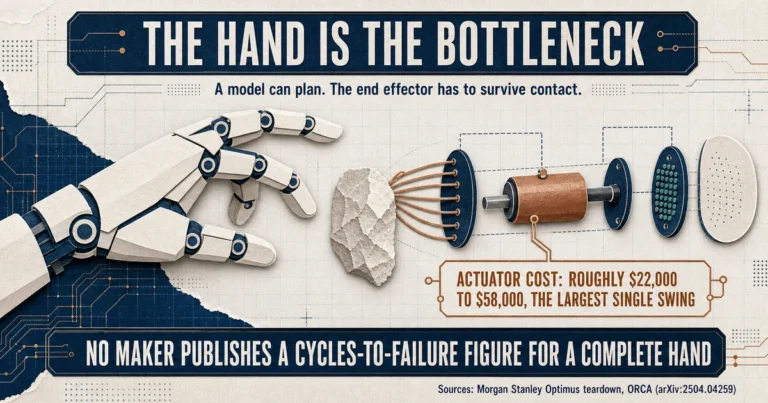
Humanoid robot AI is nearly solved; the 2026 bottleneck is dexterous hands and actuators, a hardware layer China's supply chain now quietly dominates.
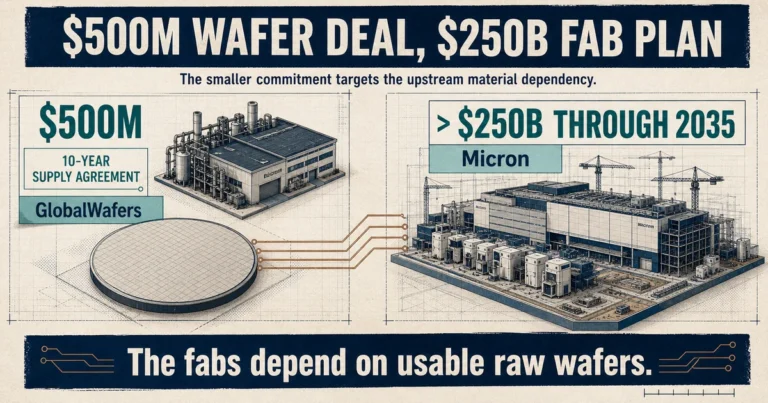
Micron's $250 billion US investment grabbed headlines, but a $500M stake in America's only advanced 300mm raw-wafer plant is the real supply-chain move. Here's why.
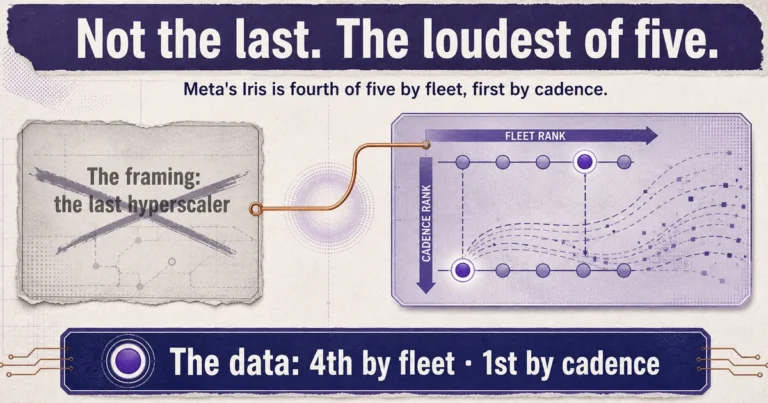
Meta's Iris AI chip enters production in September 2026, part of a 7-to-14GW compute plan. Why it targets inference, not Nvidia's training crown - and what it changes.
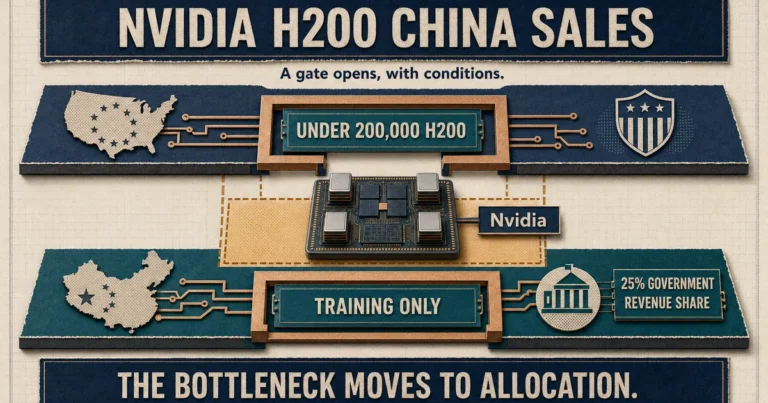
Beijing may let Alibaba, ByteDance, and DeepSeek buy Nvidia H200 chips - under 200,000 units, training only. What the two-government gate means.