Semiconductor
DRAM Capacity Timeline Shows No Relief Before Mid-2029
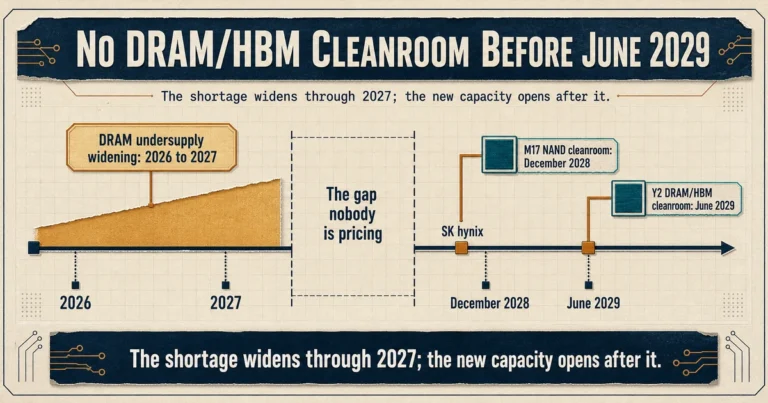
SK hynix approved $38 billion in new fabs, but the DRAM capacity timeline puts the first DRAM/HBM cleanroom at June 2029 - the shortage isn't over yet.
Facts first. Clear writing. Better decisions.
SK hynix approved $38 billion in new fabs, but the DRAM capacity timeline puts the first DRAM/HBM cleanroom at June 2029 - the shortage isn't over yet.
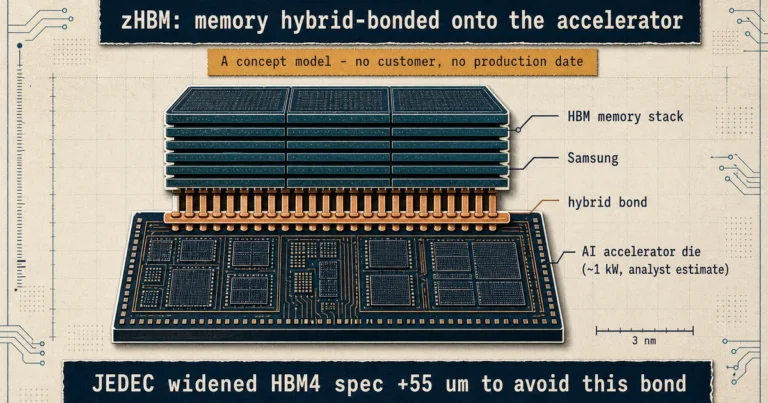
Samsung zHBM would hybrid-bond memory directly onto AI accelerator chips, but JEDEC just widened HBM4's own spec by 55 micrometers to avoid that same bond.
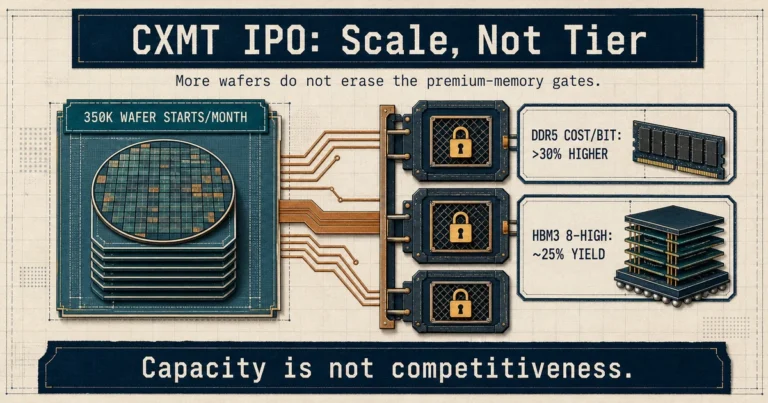
The CXMT IPO funds DRAM capacity nearing Micron's, but capacity isn't competitive supply - bit output, DDR5 cost, and HBM yield tell the real story.
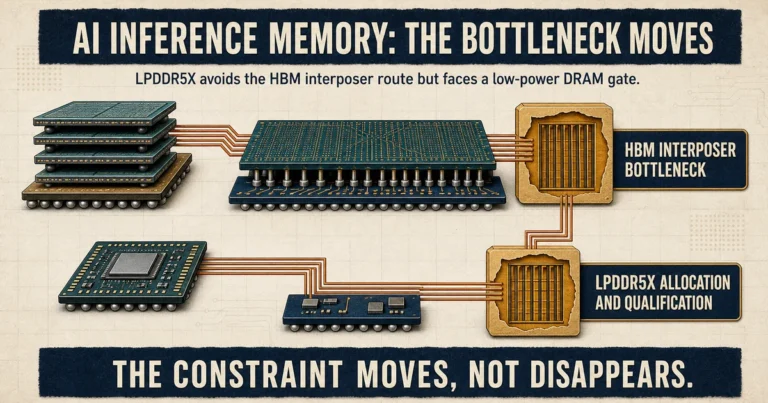
LPDDR5X is how AMD, Intel, and Qualcomm build AI inference chips around the HBM and CoWoS crunch - but AI demand is now rationing that memory tier too.
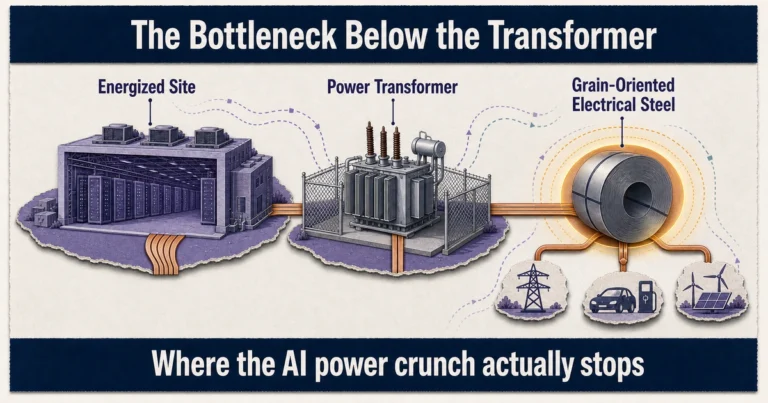
AI's power bottleneck runs below the transformer to grain-oriented electrical steel - a specialty steel only a few mills make, sold out through 2028.
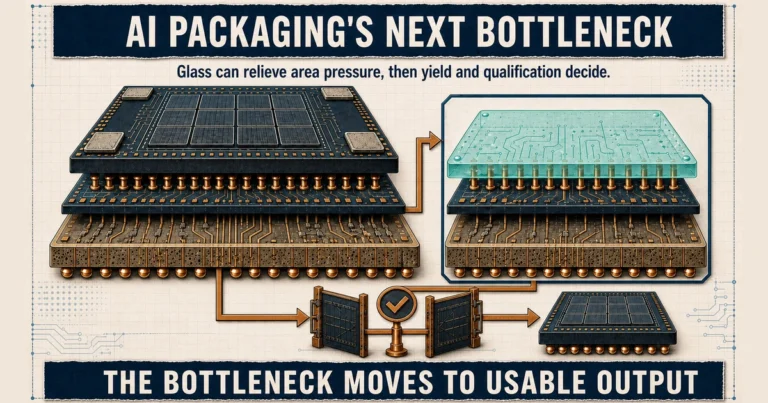
The glass substrate is where AI's packaging bottleneck moves next, below CoWoS - and a merchant fab in Georgia is on track to reach commercial scale before TSMC.
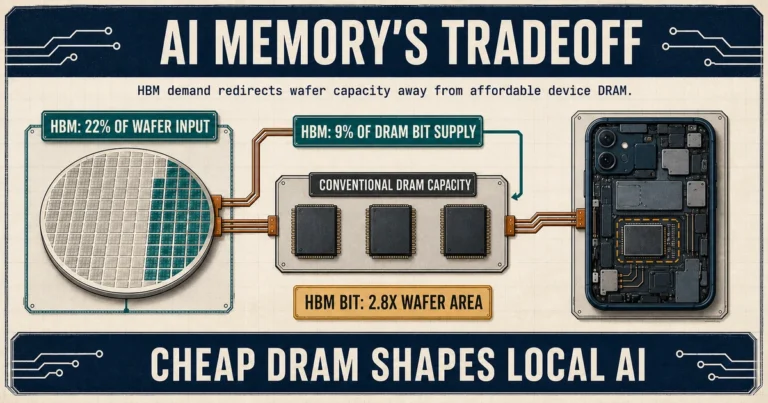
The 2026 DRAM shortage looks like pricier gadgets, but AI's cloud demand is rationing the cheap memory on-device AI needs - and Samsung is starving its own phones.
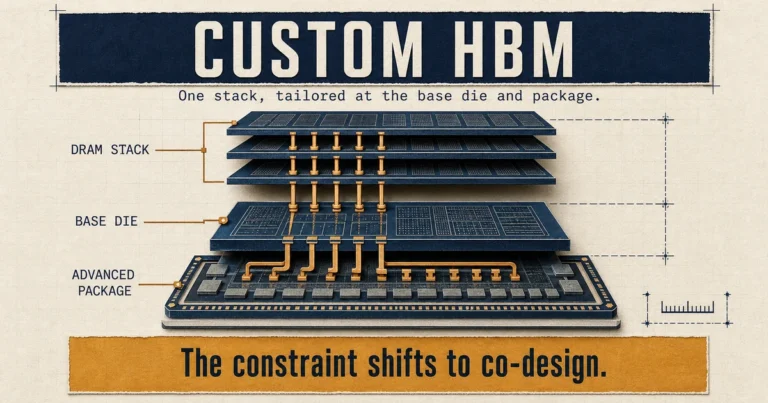
Custom HBM won't end AI memory scarcity - SK hynix's HBM4E roadmap shifts the real bottleneck to base-die co-design, qualification, and yield-limited variants.